
Nanjing's Timeless Culinary Jewel: The Salted Duck
Discover the traditional preparation of Nanjing Salted Duck, a dish rich in heritage and flavor. Learn the authentic recipe and cultural significance.
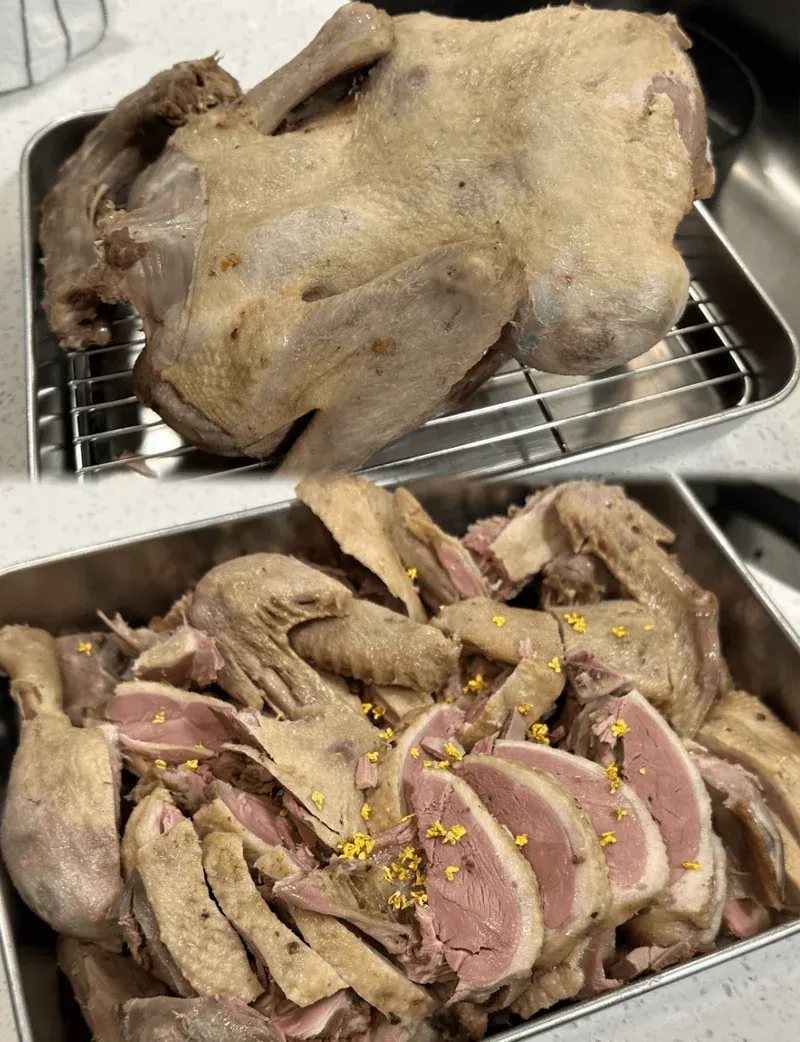
Nanjing’s Salted Duck, often celebrated as a culinary emblem of the city formerly known as Jinling, embodies an intricate blend of tradition and meticulous preparation. Distinguished from its roasted or braised counterparts, this dish employs a delicate tri-phase method: a dry rub with aromatic salt, immersion in a brine, and a gentle poach. The outcome is a duck with a jade-like skin and meat that is tender, savory, and wonderfully aromatic. Traditionally, this dish reaches its pinnacle during the Mid-Autumn Festival, when the osmanthus flowers blanket the region, earning it the poetic moniker ‘Osmanthus Duck.’
📋Essential Ingredients
- 1 Whole duck (approx. 2kg, skin-on and cleaned)
- 95g Coarse sea salt
- 2 tablespoons Sichuan peppercorns
- 50g Fresh ginger (sliced)
- 3 Scallions (tied into knots)
- 2 Star anise
- 1 piece Cassia bark (Cinnamon stick)
- 2 tablespoons Shaoxing wine
- Water (sufficient to submerge the duck)
🔪Preparation Steps
Step 1: Infusing the Salt with Spice
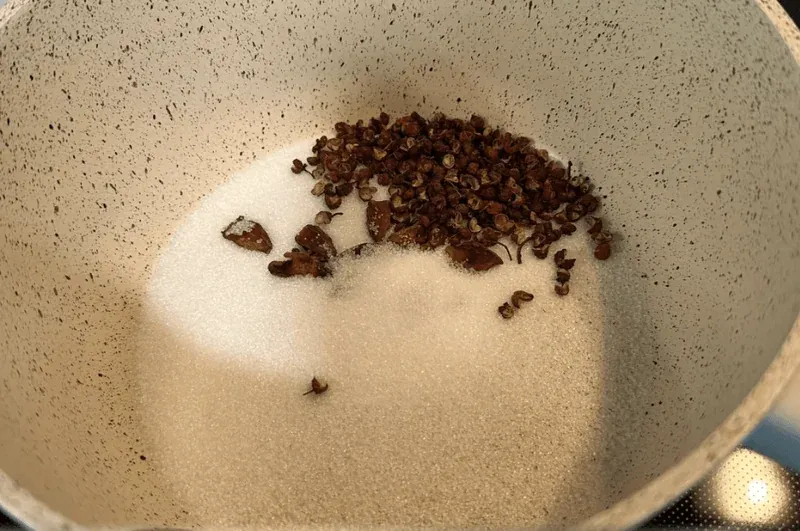
In a dry wok or skillet over medium-low heat, introduce the coarse sea salt and Sichuan peppercorns. Stir consistently until the salt attains a subtle yellow hue and the peppercorns release a potent aroma. Allow it to cool slightly while maintaining warmth.
Step 2: Applying the Dry Cure
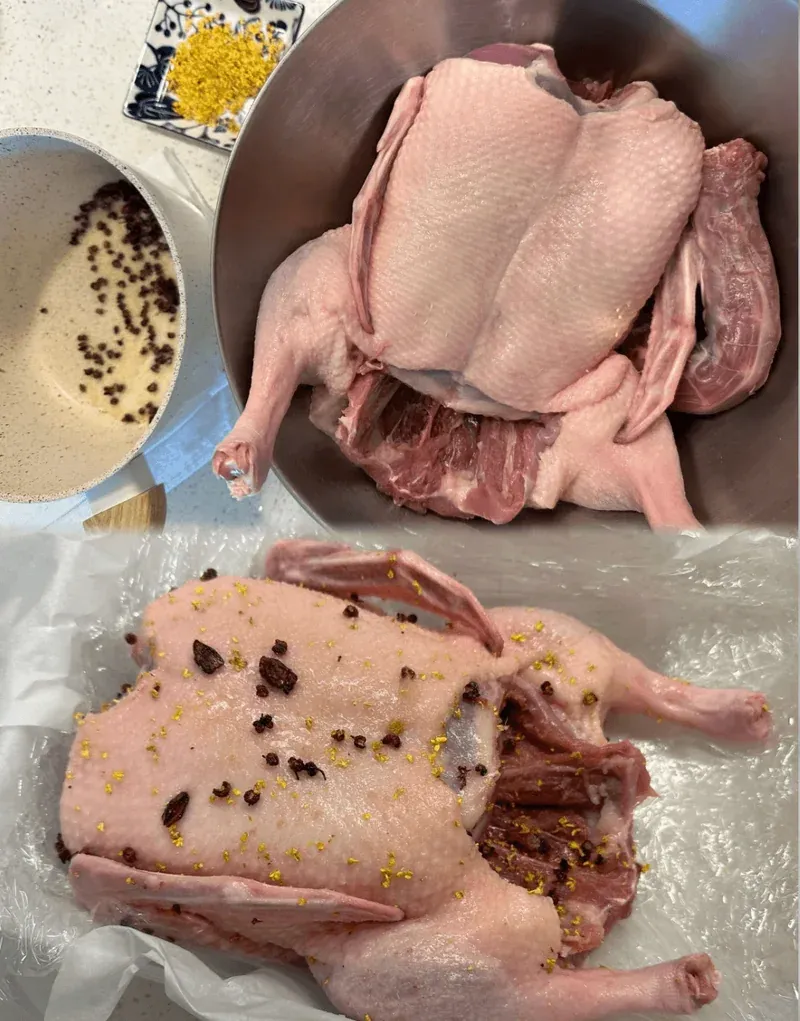
As the salt remains warm, apply it generously over the duck, ensuring to cover the cavity and beneath the wings. This step is crucial for the salt to penetrate through the skin, firming up the meat. Place the duck into a container, cover it, and refrigerate for approximately 2 to 3 hours.
Step 3: Submerging in Brine
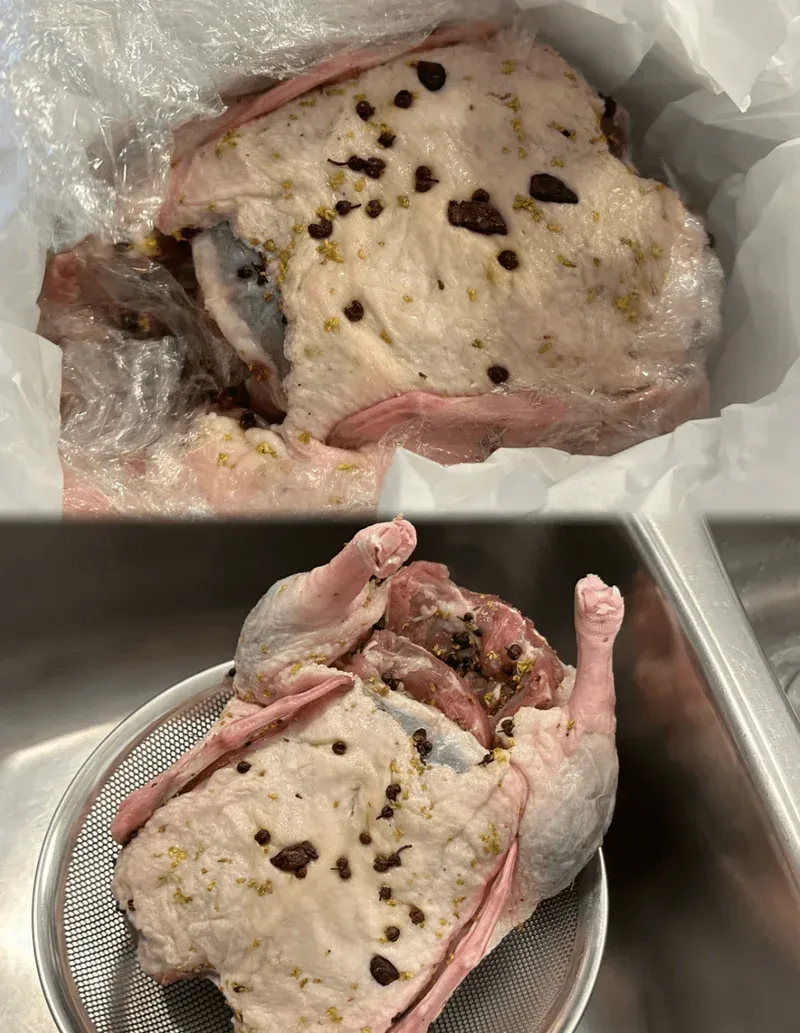
After the dry curing, rinse off any excess salt. Immerse the duck in a large bowl filled with cold water, adding salt, ginger, star anise, and scallions. This wet soak ensures the meat remains moist and flavorsome. Refrigerate and soak for another 2 hours.
Step 4: Gentle Poaching
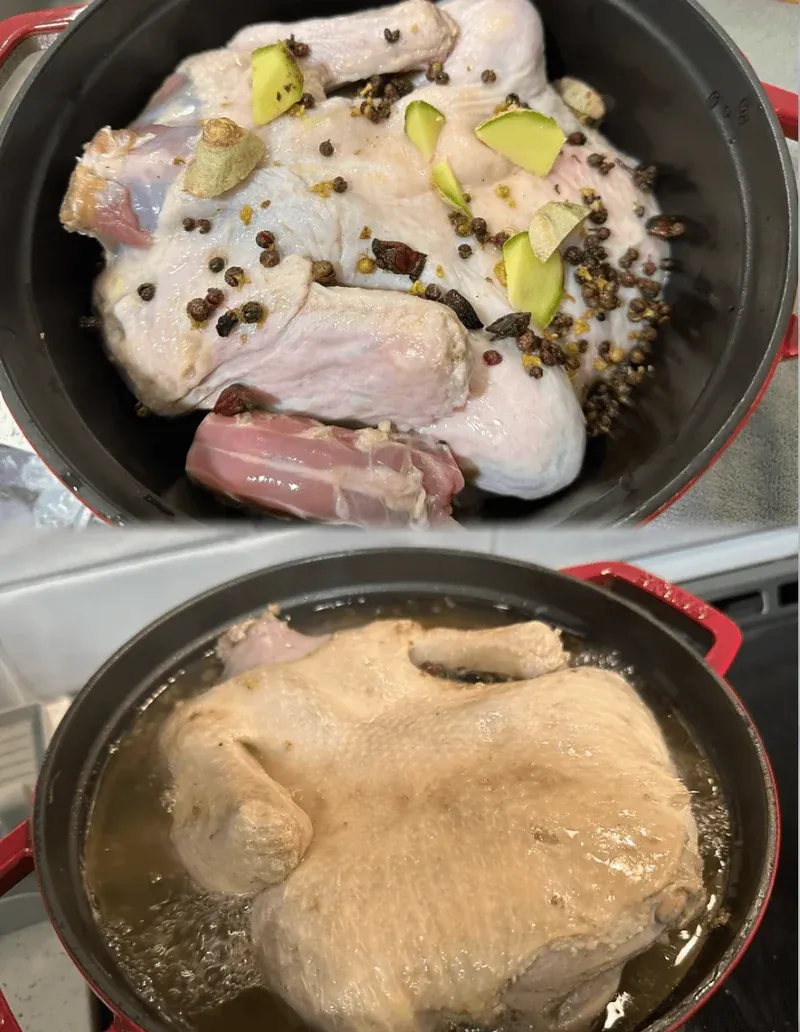
- In a large pot, bring water to a simmer with additional ginger, scallions, and Shaoxing wine. Avoid reaching a rolling boil. Submerge the duck and maintain the water at a ‘barely simmering’ temperature (around 85-90°C) for 45-55 minutes. This poaching technique is key to achieving the dish’s renowned tenderness.
Step 5: Cooling and Setting
- Remove the duck from the liquid and allow it to cool completely at room temperature. Once cooled, refrigerate for at least an hour before slicing. This resting period lets the juices consolidate and the skin firm up, facilitating neat slicing.
Step 6: Slicing and Presentation
- Slice the duck into bite-sized, uniform pieces. The skin should be pale with the meat retaining a slight rosy tint. Serve either cold or at room temperature.
Crucial Considerations
- Temperature Vigilance: Avoid boiling. Boiling toughens the meat and makes the skin oily. Keep the water just below boiling with a gentle simmer.
- Aromatic Salt: Roasting the salt with peppercorns is indispensable. This step releases essential oils from the peppercorns, imbuing the salt with the signature ‘Jinling fragrance.’
- Meat Color: The pinkish hue is characteristic of the dish, indicating proper salting and poaching, not undercooking.
- Salt Selection: Opt for coarse sea salt. It effectively draws moisture from the skin, contributing to a firmer texture.
🧪Nutritional Insights (Per Serving)
- Calories: 315 kcal
- Protein: 23 g
- Total Fat: 23 g (Duck fat is predominantly monounsaturated)
- Carbohydrates: 1 g
- Iron: 16% DV
- Sodium: 810 mg (Reflective of the traditional salting method)